Yoga for Men: A Practical Guide for Beginners

Long hours at a desk and the constant pressure to perform can take a serious toll on your body, leading to chronic back pain, tight hips, and stiff shoulders. While you might be tempted to push through it, these issues can limit your performance in the gym and drain your energy for everything else. This is where a targeted yoga practice comes in. It’s a highly effective system for undoing the damage of a modern career by building core strength, improving posture, and releasing tension in all the right places. This guide provides a straightforward approach to yoga for men, focusing on practical solutions for common physical problems.
Key Takeaways
- Build a More Resilient Body
: Yoga develops practical strength and mobility using your own body weight, targeting common male trouble spots like the hips and lower back to improve posture and reduce the risk of injury.
- Gain a Competitive Mental Edge
: The practice is a powerful tool for managing stress and improving focus, using controlled breathing to calm your nervous system and keep you sharp and decisive under pressure.
- Make It Fit Your Schedule
: You don't need to be flexible or commit to long classes; start with short, 15-minute sessions a few times a week to build a consistent habit that delivers real results without overwhelming your calendar.
Why Should Men Do Yoga?
If you think yoga is just gentle stretching in a quiet room, it’s time to reconsider. For high-performing men, yoga is a powerful tool for building a resilient body and a focused mind. It’s not about chanting or tying yourself into a pretzel; it’s about functional strength, mental clarity, and gaining a competitive edge in every aspect of your life. Think of it as a strategic practice to counteract the physical and mental toll of a demanding career, helping you stay sharp, strong, and injury-free for the long haul.
Build Strength and Flexibility
Yoga is a serious workout that builds practical, functional strength. Instead of isolating muscles, yoga poses require you to support and control your own body weight, engaging multiple muscle groups at once. This develops balanced strength across your entire body, from your core and back to your shoulders and legs. It also directly targets the areas where men are typically tight, like the hips, hamstrings, and shoulders. Improving your flexibility isn't just about touching your toes; it’s about increasing your range of motion, which helps prevent injuries, improves your form in other workouts, and keeps you moving efficiently.
Sharpen Your Mental Edge
In a world of constant demands and distractions, the ability to stay calm and focused is a superpower. Yoga is a proven practice for managing stress and improving mental clarity. The focus on controlled breathing calms your nervous system, helping to lower cortisol levels and reduce the feeling of being overwhelmed. This isn't just about relaxation; it's about training your mind to stay present and sharp under pressure. Regular practice can lead to better sleep, improved concentration, and greater emotional regulation, all of which are essential for making clear decisions and leading effectively. It’s a core component of the holistic approach to well-being we use to help successful men thrive.
Forget the Myths: What Yoga Really Is
Let’s clear up a few things. First, yoga is not just for women. In fact, many of the world’s top male athletes use yoga to enhance their performance and speed up recovery. Second, it’s not just stretching. Dynamic styles of yoga will have you sweating and building muscle, offering a challenging workout that improves your overall fitness. You also don’t need to be flexible to start—that’s like saying you need to be strong to start lifting weights. The entire point is to begin where you are. With the rise of programs designed specifically for men, like Man Flow Yoga, it’s easier than ever to find a style that feels right for you.
How Is Yoga Different for Men?
Yoga isn’t a one-size-fits-all practice, and frankly, men often walk into their first class with a different set of physical challenges than women. Years of focusing on traditional strength training, combined with long hours at a desk, can lead to specific patterns of tightness and tension. The good news is that yoga is exceptionally good at addressing these issues head-on. It’s not about forcing your body into pretzel shapes; it’s about working with your unique anatomy to build functional strength and mobility.
Understanding these differences is the first step to creating a practice that serves you. Instead of feeling frustrated by certain poses, you can use specific strategies and tools to get the most out of every session. This approach is key to building a sustainable habit that supports your long-term health goals, which is a core part of the comprehensive coaching we champion.
Tackle Male-Specific Physical Hurdles
Let’s be direct: many men have tight hips, hamstrings, and lower backs. This isn't a personal failing; it's often a result of anatomy and lifestyle. All that time spent sitting in an office chair can cause your pelvis to tilt backward, forcing your lower back to round. This posture doesn't just look bad—it creates chronic tension and stiffness. When you try a pose like a forward fold, that tightness immediately shows up.
This is where props become essential tools, not crutches. Using yoga blocks under your hands, for example, brings the floor closer to you, allowing you to maintain a straight spine and get a more effective stretch without strain. Think of it as a smart adjustment to make the pose work for your body, ensuring you build flexibility safely and efficiently.
Target Tight Hips and Lower Back Pain
That chronic tightness in your hips and lower back isn't just a physical issue—it’s often connected to stress. The body holds onto tension, and for many men, the hips are a primary storage unit. Yoga directly addresses this by gently opening these tight areas, which can provide immediate physical relief and a surprising emotional release. It’s one of the most effective ways to naturally improve your mental health and clear your mind after a demanding day.
By focusing on poses that target these problem spots, you’re not just stretching muscles; you’re actively working to manage stress and burnout. A consistent practice can lead to better sleep, sharper mental clarity, and a greater sense of calm, giving you the tools to handle high-pressure situations with more ease.
What Gear Do You Actually Need?
Getting into yoga doesn’t require a huge investment in fancy equipment. The focus is on movement, not accessories. While you could walk into a class with nothing, a few key items will make your practice more comfortable, effective, and safe. Think of this gear less as a requirement and more as a set of tools to help you get the most out of every pose, especially when you’re just starting out and your body is still adapting to new movements. Let's cut through the noise and focus on what will actually support your practice.
The Must-Haves for Your First Class
Forget the expensive apparel and trendy accessories for now. There are only three pieces of gear you truly need. First, a quality yoga mat is non-negotiable. It provides grip so you don’t slip and offers cushioning for your joints. Next, grab a yoga block. This is especially important for men, as it acts as an extension of your arms to make poses more accessible when dealing with tightness in the hips, back, or shoulders. Finally, a yoga strap will be your best friend for safely deepening stretches. It helps you reach poses that might otherwise be impossible due to tight hamstrings or shoulders, ensuring you get the benefit of the pose without risking injury. These tools are fundamental to a solid yoga practice for men.
Smart, Budget-Friendly Options
You don’t need to spend a fortune to get started. If you’re not ready to commit to buying new gear, you can easily find substitutes around your house. Instead of a yoga block, a sturdy stack of books will work just fine to support your weight and bring the floor closer to you. For a yoga strap, a simple belt, a tie, or even a dog leash can provide the tension you need to ease into stretches. The goal is function over form. Using these household items is a great way to try yoga at home and see if it’s right for you before you decide to invest in dedicated equipment.
Find the Right Yoga Program for You
So you're ready to give yoga a shot. A quick search online will show you a dizzying number of apps, YouTube channels, and online studios. The key isn't to find the best one, but the one that's best for you. You need a program that understands the male body, fits into your demanding schedule, and focuses on the results you care about—like building functional strength and getting rid of nagging pain. Let's cut through the noise and look at some solid options and what makes them work.
Top Pick: Man Flow Yoga
If you want to skip the spiritual side and focus purely on the physical benefits, Man Flow Yoga is an excellent place to start. This platform was created specifically for men, with workouts designed to build strength, improve flexibility, and enhance overall fitness. The approach is straightforward and athletic, making it a comfortable entry point if traditional yoga classes feel a bit intimidating. It’s all about functional movement that translates to better performance in the gym or just getting through a long day at the desk without your back seizing up. It’s a practical, no-nonsense take on yoga that many men find refreshing.
What to Look for in Other Programs
If you decide to explore other options, keep a few key criteria in mind. Look for programs that directly address common male trouble spots like chronic back, neck, shoulder, and knee pain. The best programs offer workouts for all skill levels, so you won't feel lost or risk injury trying to keep up with advanced practitioners. This focus on targeted, safe progression is something we emphasize in our own coaching for highly successful men, because a one-size-fits-all approach rarely works. Your yoga program should feel like it was designed with your body and your goals in mind, providing clear instruction for beginners.
Try Before You Buy: Free Trials and Discounts
You wouldn't buy a car without a test drive, so don't commit to a yoga program without trying it first. Most reputable online platforms offer a free trial period, which is the perfect way to see if the teaching style, workout intensity, and community vibe are a good fit for you. For example, Man Flow Yoga offers a free 7-day trial that gives you full access to their Members' Area. You can explore their different programs, tutorials, and workouts before spending a dime. Taking advantage of these trials is a smart, low-risk way to find a program you'll actually stick with for the long haul.
Start with These Beginner Poses
Getting started with yoga doesn't mean you have to twist yourself into a pretzel on day one. The key is to master a few foundational poses that target common problem areas for men: tight hips and a sore lower back. Focusing on these moves will help you build a solid base, improve your mobility, and feel the benefits right away. Think of these poses as tools you can use anytime, whether it's to decompress after a long day at the office or to aid recovery after a tough workout.
The goal here isn't perfection; it's progress. Pay attention to how your body feels and don't force anything. With consistent practice, you'll notice significant improvements in your flexibility and overall comfort.
Poses to Open Tight Hips
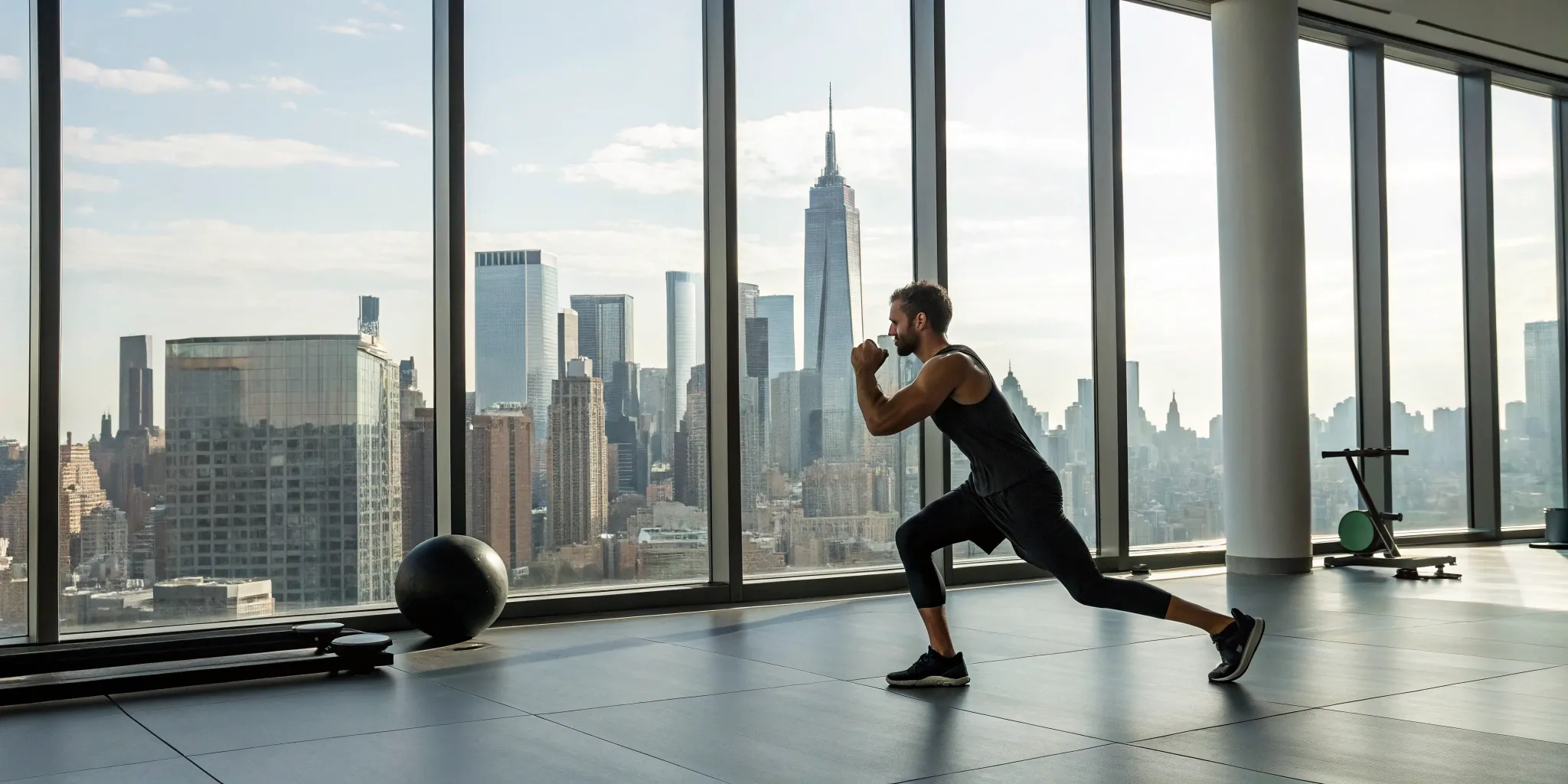
If you spend a good portion of your day sitting at a desk, your hips are likely paying the price. Tight hip flexors can lead to poor posture and lower back pain. These two poses are fantastic for creating space and releasing that tension. First, try the Low Lunge. Step one foot forward, bending your front knee to a 90-degree angle while your back knee rests on the floor. This pose directly stretches the hip flexors and strengthens your legs. Another essential pose is Warrior One. This is a standing pose that builds serious leg strength while opening the hips, helping you improve your balance and stability for more advanced movements down the line.
Poses to Relieve Lower Back Pain
Lower back pain is one of the most common complaints from men, often stemming from weak core muscles, tight hamstrings, or prolonged sitting. These poses offer gentle relief and help decompress the spine. Start with a Forward Fold. Stand with your feet hip-width apart and hinge forward from your hips, letting your head and arms hang heavy. Keep a slight bend in your knees to take the pressure off your lower back and focus the stretch on your hamstrings. For a more restorative option, move into Child's Pose. Kneel on the floor, sit back on your heels, and fold forward, resting your forehead on the mat. This is a go-to for releasing tension along your entire back.
How to Modify Poses if You're Not Flexible
Flexibility isn't a prerequisite for yoga—it's a result of it. If you feel stiff, don't worry. Using props and simple adjustments can make any pose accessible. For example, if you can't press your palms together in a pose like Eagle Arms, just press your forearms together instead. When sitting on the floor, place a yoga block under your hips to tilt your pelvis forward and maintain a straight spine. For reclined hip openers, you can slide blocks under your knees for support. These modifications allow you to get the benefits of the pose without strain, which is a core part of a smart and sustainable fitness program.
How Yoga Solves Common Health Issues for Men
Yoga is more than just a workout; it’s a practical system for upgrading your physical and mental operating system. For high-achieving men, the demands of a career can lead to specific health issues like back pain, chronic stress, and physical stiffness that can hinder performance in and out of the gym. A consistent yoga practice directly targets these problems, offering tangible solutions that go far beyond simply touching your toes. It’s about building a more resilient body and a sharper mind to handle the pressures of a demanding life. By integrating yoga, you’re not just adding another exercise routine; you’re adopting a powerful tool for long-term health and peak performance.
Fix Your Posture and End Back Pain
If you spend your days leading meetings or sitting at a desk, chances are you’re familiar with lower back pain and tight shoulders. This discomfort is often a direct result of poor posture, where muscles in your back and core weaken over time. Yoga systematically rebuilds this foundation. Poses like Downward-Facing Dog and Warrior II lengthen your spine and strengthen the core muscles that support it. This isn't just about temporary relief. By improving your body awareness, you start to correct your posture naturally throughout the day. Furthermore, yoga helps address the stress that causes you to tense up, releasing the chronic tightness in your neck and shoulders that contributes to the problem.
Manage Stress and Gain Mental Clarity
In a high-stakes environment, managing your mental state is non-negotiable. Constant pressure can lead to burnout and clouded judgment. Yoga provides an active form of meditation, forcing you to focus on your breath and body, which pulls you out of the endless loop of work-related thoughts. This practice trains your nervous system to shift from a "fight-or-flight" state to a "rest-and-digest" mode, lowering cortisol levels and improving your ability to handle pressure. This is a core component of the holistic coaching we provide, helping you build the mental resilience needed to stay at the top of your game.
Improve Athletic Performance and Speed Up Recovery
Whether you’re a runner, a weightlifter, or a weekend warrior, your performance hinges on more than just strength. It requires mobility, balance, and efficient recovery. Yoga directly enhances these areas. By opening up tight hips and hamstrings, you increase your range of motion, allowing for more powerful and efficient movements while reducing your risk of injury. It also improves circulation, which helps flush out lactic acid and reduces muscle soreness after a tough workout. The mental benefits play a huge role here, too. The focus and discipline you cultivate on the mat translate directly to your sport, improving your concentration and helping you push through physical and mental barriers.
What to Expect in Your First Month
Starting any new routine can feel uncertain, but knowing what’s ahead makes all the difference. Your first month of yoga is about building a foundation, not achieving perfection. It’s about showing up, learning the basics, and paying attention to how your body and mind respond. Forget about nailing every pose right away. Instead, focus on consistency and giving yourself the space to learn. This initial period is where you’ll start to notice small but significant shifts in your flexibility, strength, and mental clarity. Let’s break down what you can realistically expect and how to handle the common hurdles you might face.
What If You're Not Flexible?
Let’s clear this up right now: saying you’re not flexible enough for yoga is like saying you’re too dirty to take a shower. Flexibility is a result of practicing yoga, not a requirement to start. Your first few sessions will likely highlight just how tight your hips, hamstrings, and shoulders are, and that’s completely normal. The goal isn’t to touch your toes on day one. The goal is to show up and breathe through the discomfort. Yoga is designed to help loosen up your body, work through knots and pressure points, and ultimately make you feel more mobile and younger. Every pose can be modified to meet you where you are today.
Set Realistic Goals for Your First 30 Days
Consistency trumps intensity, especially when you’re starting out. Don’t try to jump into an hour-long class every single day. You’ll burn out or risk injury. Instead, set a manageable goal that fits into your demanding schedule. Aim for two to three yoga sessions per week, each lasting about 20 to 30 minutes. This gives your body time to adapt and recover while still building a solid habit. Many programs are designed for all skill levels, especially for men who are new to yoga or believe they aren't flexible. The key is to simply get on the mat regularly. That’s the win for your first month.
Get Past the Mental Blocks and Gym Culture
If your fitness background is rooted in the competitive energy of a gym, yoga will require a mental shift. This isn’t about lifting heavier or running faster than the guy next to you. It’s an internal practice. Yoga gives you a pause—a dedicated space in your life to quiet the noise. The focus on your breathing and the physical postures helps create a profound sense of calm. It’s one of the most effective ways to naturally support your mental health by clearing and calming your mind. Leave your ego at the door and focus on your own experience. This practice is for you, and no one else.
Choose the Right Yoga Style for Your Goals
Not all yoga is the same. Just like you wouldn't use a dumbbell for cardio, you shouldn't walk into a random yoga class expecting it to match your specific fitness goals. Different styles offer different benefits, from intense, muscle-building workouts to slow, deep stretches that aid recovery. The key is to identify what you want to achieve—whether it's raw strength, better flexibility, or faster recovery—and then pick the style that gets you there.
For Strength: Power Yoga
If you think yoga is just gentle stretching, you haven't tried Power Yoga. This is a dynamic, physically demanding practice designed to build muscle and improve your overall fitness. It’s an athletic, vigorous style that moves you through a series of poses quickly, keeping your heart rate up and challenging your endurance. Think of it as a full-body workout that uses your own body weight for resistance. It’s an excellent choice if you want to add a new dimension to your strength training routine while also building mental resilience.
For Recovery: Restorative Yoga
On days when your body is screaming for a break, Restorative Yoga is your answer. This style is the complete opposite of a high-intensity workout. It’s all about slowing down and allowing your body to heal. You’ll use props like bolsters and blankets to support your body in gentle, passive stretches held for several minutes. The goal is deep relaxation, not exertion. This practice is incredibly effective for reducing stress and promoting recovery after tough workouts. It’s the perfect way to reset your nervous system and give your muscles the downtime they need.
For Flexibility: Hot Yoga
If your hamstrings are as tight as guitar strings, Hot Yoga might be the solution. This style is practiced in a room heated to around 95-105°F, which helps your muscles loosen up faster and more safely. The heat allows you to get into deeper stretches than you might in a non-heated room, significantly improving your range of motion over time. It’s a challenging practice that will make you sweat, but the payoff in flexibility is huge. Practicing in a heated room can enhance flexibility and help prevent injuries by making the muscles more pliable. It’s especially effective for targeting chronically tight areas like the hips, shoulders, and lower back.
Fit Yoga Into Your Busy Schedule
One of the biggest hurdles to starting yoga is the belief that it requires a full hour in a studio to be effective. For busy professionals, that’s often not realistic. The good news is that you can get significant mental and physical benefits by integrating short, targeted yoga sessions into your existing routine. Think of it as a strategic tool to manage stress, improve focus, and aid physical recovery—not another item on your to-do list. By fitting yoga into the small pockets of your day, you can build a sustainable practice that supports your high-performance lifestyle without demanding a huge time commitment.
Quick Routines to Start Your Day
Starting your morning with even 10 to 15 minutes of yoga can completely change the trajectory of your day. Instead of reaching for your phone and diving straight into emails, a quick routine helps clear your mind, reduce stress, and set a calm, focused tone. This isn't about mastering complex poses; it's about intentional movement and breathing to wake up your body and mind. A few simple stretches like Cat-Cow, Downward-Facing Dog, and a standing forward fold can work out stiffness from sleep and improve mental clarity. This small investment of time pays dividends by helping you handle the day's challenges with a more regulated emotional state. It's a core principle we focus on when coaching highly successful men to build powerful daily habits.
Add a Post-Workout Recovery Session
If you’re already hitting the gym or training hard, yoga is one of the best recovery tools you can add to your arsenal. A short, 10-minute session after your main workout can help release muscle tension, improve flexibility, and kickstart the recovery process. The practice gives you a deliberate pause, a space to transition from a high-intensity state to one of calm. Focusing on your breathing helps lower your heart rate and triggers a relaxation response, which is essential for muscle repair and growth. Think of it less as another workout and more as an active cool-down that enhances the results of the work you just put in.
How to Stay Consistent Without Feeling Overwhelmed
The key to seeing real results from yoga is consistency, but that doesn't mean you have to practice every single day. The all-or-nothing mindset is a trap. Instead, set a realistic goal, like three 15-minute sessions per week. By incorporating short, manageable practices into your schedule, you can build momentum without feeling overwhelmed. Combining improved flexibility with increased mindfulness has been shown to directly benefit mental health. When you start small, you create a sustainable habit that you can build on over time. Once the routine is established, you might find yourself naturally wanting to extend your sessions or practice more frequently.
Related Articles
Frequently Asked Questions
I'm not flexible at all. Will I look foolish if I try yoga? Not at all. Thinking you need to be flexible to start yoga is like thinking you need to be in shape to go to the gym. The entire point of the practice is to build mobility and flexibility from wherever you're starting. In any good class or program, no one is paying attention to you; they're focused on their own practice. Using props like blocks isn't a sign of weakness—it's a sign that you're smart enough to make the pose work for your body.
Is yoga a good enough workout on its own, or should I combine it with weightlifting? It really depends on the style of yoga you choose and what your goals are. A dynamic Power Yoga class can absolutely be a challenging, full-body strength workout. However, most men find that yoga works best as a powerful complement to their existing training. It builds functional strength, balance, and mobility in ways that traditional lifting can't, which helps you lift heavier and prevent injuries in the long run.
I'm not interested in the spiritual or chanting side of things. Is yoga still for me? Absolutely. While yoga has ancient spiritual roots, many modern forms focus exclusively on the physical and mental benefits of the practice. You can find countless programs, especially those designed for men, that treat yoga as a straightforward system for improving your body and mind. It's entirely possible to have a practical, results-driven yoga routine without any spiritual components.
How long will it take to see actual results from practicing yoga? You'll likely feel some benefits right away. Many men notice a sense of mental clarity and reduced stress after their very first session. Physical changes, like less back pain and improved mobility, typically become noticeable within the first month of consistent practice, meaning you're getting on the mat two or three times a week. The key is consistency, not intensity.
What's the single biggest mistake beginners make when starting yoga? The biggest mistake is treating it like a competition and pushing through pain. If your background is in competitive sports or lifting, it's easy to bring that "no pain, no gain" mindset to the mat, but that's a fast track to injury in yoga. The goal is to challenge your body, not force it. Learning to listen to your body's signals and backing off when something feels sharp or wrong is the most important skill you can develop.

Comments